Courts Defined: Adjudicating Justice and Upholding the Rule of Law
At the heart of any functioning society lies a robust system for resolving conflicts and ensuring fairness: the court system. Far more than just buildings where disputes are heard, courts are fundamental institutions, embodying the very principles of justice and the rule of law. They serve as the critical arbiter, translating complex legal frameworks into actionable decisions that impact individuals, businesses, and governments alike. Understanding the essence of a court, its structure, and its enduring purpose is crucial for appreciating the foundations of modern governance and individual rights.
What Exactly is a Court? Unpacking the Core Definition
In its most fundamental sense, a court is an institution, predominantly a government entity, vested with the solemn authority to adjudicate legal disputes between parties. Its primary mission is to administer justice across a spectrum of matters—civil, criminal, and administrative—all in strict accordance with the rule of law. This means that decisions are not arbitrary but are based on established legal principles and procedures.
A court is typically presided over by one or several judges or other judicial officers, individuals whose expertise and impartiality are central to the institution's legitimacy. These institutions are generally established and dissolved through legislative acts, passed by a country's legislature, or sometimes directly constituted by a nation's constitution or an equivalent founding document. This legislative or constitutional backing underscores their official status and the weight of their decisions.
Whether operating within common law systems, which emphasize judicial precedent, or civil law systems, which prioritize codified statutes, courts serve as the central mechanism for dispute resolution. It's a widely accepted tenet that all individuals have the right to bring their claims before a court, seeking redress or clarification of their rights. Similarly, those accused of a crime are guaranteed the right to present a defense and be heard before a court, a cornerstone of due process.
The Indispensable Role of Courts in Society
The significance of courts extends far beyond mere dispute resolution; they are the bedrock upon which social order, individual liberties, and governmental accountability are built. Their functions are multifaceted and vital:
- Dispute Resolution: Courts provide a structured, impartial forum for resolving disagreements that cannot be settled amicably. This ranges from civil disputes (contract breaches, personal injury, family matters) to criminal cases (theft, assault, fraud) and administrative challenges (appeals against government agency decisions).
- Upholding the Rule of Law: By interpreting and applying laws, courts ensure that everyone—from the humblest citizen to the highest government official—is subject to the same legal standards. This prevents arbitrary rule and ensures predictability in legal outcomes.
- Protecting Rights and Freedoms: Courts are often the last line of defense for individual rights. They safeguard constitutional guarantees, prevent abuses of power, and ensure that justice is accessible to all. The right to a fair trial, the presumption of innocence, and protection against unlawful detention are all upheld through judicial processes.
- Setting Precedents and Clarifying Law: Especially in common law systems, judicial decisions create precedents that guide future cases, contributing to the evolution and clarification of legal principles. Even in civil law systems, judicial interpretations influence how codified laws are applied.
- Imposing Remedies and Penalties: Courts have the authority to impose various remedies to correct wrongs, such as awarding damages in civil cases, issuing injunctions to prevent certain actions, or imposing criminal penalties like fines or imprisonment. These actions are crucial for maintaining order and deterring unlawful behavior.
Without courts, societies would devolve into chaos, with disputes settled through force rather than reason. They are the essential arbitrators that allow complex societies to function harmoniously under a framework of shared rules.
Navigating the Judicial Landscape: Structure and Authority
To effectively administer justice, courts are typically organized into hierarchical structures, each with distinct powers and responsibilities. The collective system of courts that interprets and applies the law is universally known as the judiciary.
The Judiciary: A Collective Force
The judiciary is one of the three branches of government in most democratic systems (alongside the legislative and executive branches). It serves as a critical check on the power of the other branches, ensuring that laws passed by the legislature are constitutional and that actions taken by the executive are lawful. Its independence is paramount for maintaining public trust and the integrity of the justice system.
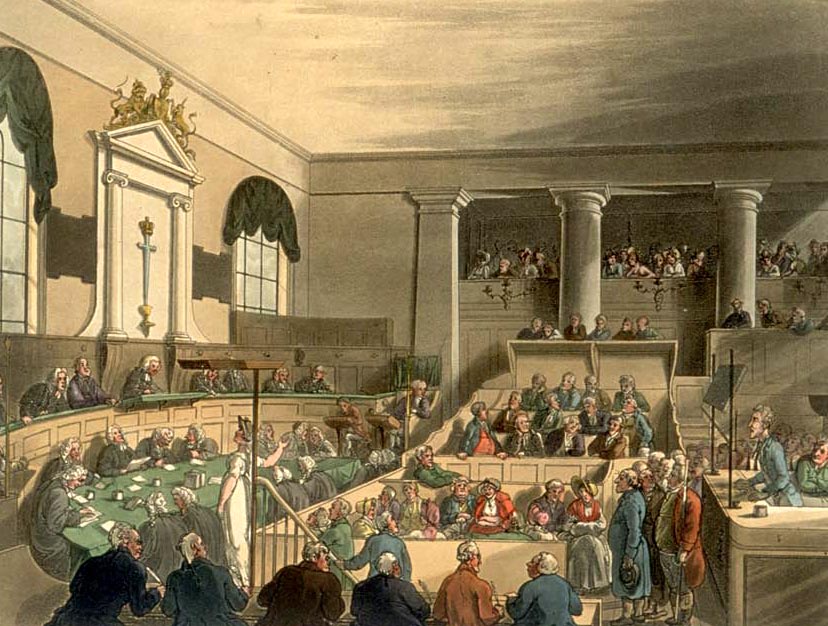
The physical aspects of the court system also have their own terminology: the place where a court sits is known as a venue. The specific room where court proceedings occur is called a courtroom, and the entire building housing these facilities is a courthouse. These facilities can range from small, simple structures in rural areas to vast, complex judicial centers in bustling urban environments.
Understanding Jurisdiction: The Court's Scope of Power
The practical authority given to a court is known as its jurisdiction. Deriving from the Latin "iurisdictio," meaning "to declare the law," jurisdiction defines the court's power to decide specific kinds of questions or petitions presented to it. Without proper jurisdiction, a court cannot legally hear or rule on a case. Jurisdiction can be categorized in several ways:
- Subject Matter Jurisdiction: Dictates the types of cases a court is authorized to hear (e.g., family courts handle domestic disputes, tax courts handle tax matters).
- Personal Jurisdiction: Refers to the court's power over the parties involved in a lawsuit.
- Geographical Jurisdiction: Specifies the territorial limits within which a court can exercise its authority.
- Original vs. Appellate Jurisdiction: Original jurisdiction means a court can hear a case for the first time (a trial court). Appellate jurisdiction means a court can review decisions made by lower courts.
Understanding which court has jurisdiction is often the first critical step in any legal proceeding.
From Local Courthouses to International Tribunals: Types of Courts
The hierarchical structure of courts is designed to provide multiple levels of review and specialization. Key types of courts include:
- Trial Courts (Courts of First Instance): These are where cases originate. They are responsible for hearing evidence, establishing facts, and issuing initial rulings. Juries are often present in trial courts to decide factual disputes.
- Appellate Courts: If a party believes there was a legal error in a trial court's decision, they can appeal to a higher court. Appellate courts do not typically hear new evidence or retry cases; instead, they review the trial court record to ensure that legal procedures were followed correctly and that the law was applied properly.
- Supreme Courts (or High Courts): At the apex of most national judicial systems, supreme courts serve as the final arbiters of legal disputes. Their decisions are binding on all lower courts, and they often play a crucial role in interpreting constitutional law and resolving conflicts between lower court rulings.
- Administrative Courts: These specialize in reviewing decisions made by government agencies and administrative bodies.
- International Courts and Tribunals: These entities, such as the International Court of Justice or the International Criminal Court, handle disputes between states or prosecute individuals for international crimes, operating under international law.
This tiered system ensures thorough review and consistent application of the law, building public confidence in the judicial process.
Hallmarks of a Just Judicial System
Beyond their structure, effective court systems share defining characteristics that underpin their legitimacy and ability to deliver justice:
- Judicial Independence: A cornerstone of justice, judicial independence means judges are free from undue influence from the executive and legislative branches, as well as from political pressures, public opinion, or personal biases. This allows them to make decisions based solely on the law and facts.
- Adherence to Procedural Due Process: Courts must follow established legal procedures, ensuring fairness and protecting the rights of all parties. This includes rights such as notice of proceedings, the opportunity to be heard, and access to legal counsel.
- Legal System Methodologies: Depending on the jurisdiction, courts operate under different legal traditions. Common law systems, prevalent in countries like the United States and the United Kingdom, emphasize stare decisis (the principle of following judicial precedents). Civil law systems, common in continental Europe and many other parts of the world, prioritize codified statutes and comprehensive legal codes.
Despite formal safeguards, courts face ongoing challenges. Ensuring factual accuracy amidst complex evidence, addressing empirical patterns of sentencing disparities, and mitigating interpretive biases remain critical concerns. These issues underscore persistent debates over institutional neutrality and the continuous effort required to ensure courts truly deliver impartial justice for all.
A Glimpse into the Origins of Justice
The concept of formalized judicial institutions is not a modern invention; it has ancient roots. The earliest evidence of a structured legal system can be traced back to ancient Mesopotamia with the Code of Ur-Nammu, inscribed around 2100–2050 BCE. This Sumerian legal code prescribed specific penalties for crimes like murder and theft, enforced by royal officials rather than relying on kin-based vengeance. This marked a profound societal shift towards codified rules and institutionalized justice, a transition from arbitrary retribution to a system governed by law.
Modern courts, particularly the Anglo-American models, have evolved significantly from medieval English assizes and equity courts, adapting to democratic governance. Today, they are often enshrined in constitutional frameworks, serving as a vital check on the other branches of power. To explore this fascinating journey in more detail, delve into our article on From Ancient Tribunals to Modern Justice: The Evolution of Courts.
In conclusion, courts are far more than mere judicial venues; they are the living embodiment of a society's commitment to justice, fairness, and the rule of law. By adjudicating disputes, safeguarding rights, and holding power accountable, courts serve as an indispensable pillar of stable, democratic societies, constantly striving to maintain social order and uphold the principles upon which civilization itself rests.